Introduction
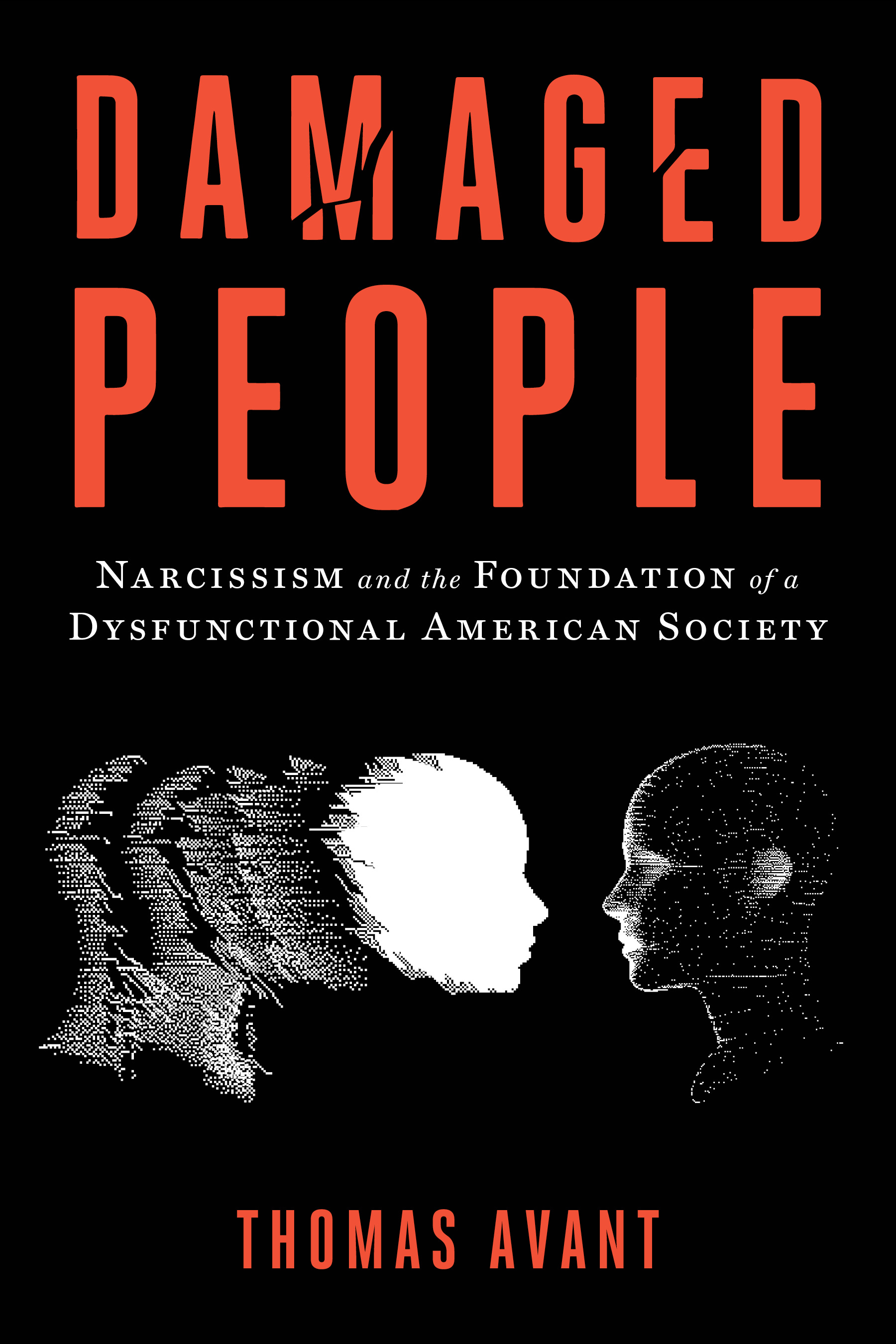
From my book, "Damaged People: Narcissism and the Foundation of a Dysfunctional American Society", published in December 2020

Damaged People: Narcissism and the Foundation of a Dysfunctional American Society is available at Amazon and Barnes & Noble.
Throughout my life, I’ve encountered emotionally damaged people everywhere: family, friends, acquaintances, the workplace, television, radio, and at the highest levels of government, business, and society. However, I wasn’t able to understand these people, their symptoms, the root causes, and their effect on myself and others until I became an educated young adult. What do I mean by “damaged people”? I use the term “damaged” to describe people who meet the criteria for diagnosis of a personality disorder such as narcissistic personality disorder (NPD) or antisocial personality disorder (APD)/sociopathy, but also those whose selfishness, manipulation of others, indifference to others’ feelings and the effects of their actions, greed, banality, fecklessness, anti-intellectualism, ignorance, and hate negatively affect society. I refer to damaged people as those whose narcissistic impulses, instincts, and behaviors cause extensive harm to those they encounter and those who are under their control and authority.
The Diagnostic and Statistical Manual of Mental Disorders, Fifth Edition (DSM-5), published by the American Psychiatric Association, defines NPD as a personality disorder with a long-term pattern of abnormal behavior characterized by exaggerated feelings of self-importance, an excessive need for admiration, and a lack of empathy. People affected by it often spend a lot of time thinking about achieving power or success, or about their appearance. They often take advantage of the people around them. The behavior typically begins by early adulthood and occurs across a variety of social situations. The prevalence of narcissism in American society is quite staggering today, as narcissists have ascended to positions of leadership, power, and authority, which has created severe and lasting consequences in our families, institutions, and every aspect of our society. Narcissism emerges from genetic factors, as well as experiences and environment. There is no clear evidence that I’ve seen to indicate whether nature or nurture plays a more significant role in the development of a narcissist, but I tend to lean toward environment (nurture) as the most critical factor.
Their self-serving motivations impose on us all and create emotional, structural, and systemic chaos and dysfunction in all aspects of society. We all suffer at the hands of narcissistic people, who project the damage they feel internally onto those around them, but do not accept who they are. These are people whose greed, lust for power and control, feelings of ineptitude and insecurity, and zest for attention and approval, drive their every interaction. Once they gain control of an organization, system, government, or family, each suffers tremendously.
My ultimate objective is to lift the veil under which these narcissists hide; to expose and hold them accountable for the pain and suffering they cause others. I hope to help others more easily identify these people and their true motivations, and ultimately overcome the emotional struggle that we all feel when dealing with them. I also hope narcissists who read this book will accept the truth of their own flaws and attempt to heal the damage within themselves, so they can begin to grow and understand the damage they inflict upon others. Exposing and accepting hard truths is a critical component of self-evaluation, self-improvement, and healing—for yourself and your relationships. For the narcissist and the victim(s), I aim to articulate the importance of humility, truth, knowledge, and acceptance. I want to help people better understand the difficulties that they face and the motivations of others.
For those of you dealing with tyrannical narcissism at work, home, or anywhere else in your life, you are not alone. My hope is that many of the concepts and anecdotes presented will be relatable for the reader, particularly with the prevalence of narcissism in society today. My proposition is that most narcissists are damaged by their environment and/or their experiences. Pain, suffering, and struggle are inherent aspects of life—particularly in a society overrun by people whose primary motivation is self-service at the expense of others. The tribal nature of our politics, the competitive desire to be better than the next person, the capitalistic principles of wealth generation, and the difficulties faced by so many Americans all contribute to a narcissistic society.
In a culture where—for many generations and particularly for men—it has been unacceptable to speak about feelings and emotions are seen as a sign of weakness, too many people hide their struggles and allow the pain and suffering to overcome them. Instead of undergoing the necessary therapeutic step of expressing their emotions and allowing the anger and frustration to evaporate naturally from their psyche, their pain and suffering, held inside, takes root and projects itself onto others with every encounter. Self-expression is a strength, not a weakness, and it’s necessary for healthy development as a productive human being. Accepting the truth, and allowing it to guide us, is essential for healing the damage within ourselves and helping us achieve psychological freedom. If we hide from the truth, we not only destroy ourselves, we destroy all our relationships. This book is about pursuing that truth, no matter how difficult it may be.
This is a book that covers many disciplines; it is about narcissism and psychology, but it also delves into politics, sociology, history, education, economics, and religion. I attempt to connect all these subjects to the current surge in narcissism which permeates our nation and our world today. While this is not a book about politics, I must mention it because the connection is clear. Political leadership has a profound impact on our quality of life and the moral direction of our country. If we are to become a productive society, we must begin to address the critical issues—healthcare for all as a right, environmental stewardship, income equality, social welfare programs, racial equality, criminal justice reform, workers’ rights, money in politics, etc.—to provide a healthy and meaningful life for all in this country. When we improve the quality of life for the majority of our citizens—not just the wealthiest—we become a socially-functional society. These issues are also directly related to the collective mental health of our nation’s citizens.
We need more politicians speaking truth to the issues which affect us all. The Merriam-Webster Dictionary defines “liberal” as: “Generous, bountiful; not narrow in opinion or judgment; tolerant.” “Conservative” is defined as: “Preservative; disposed to maintain existing views, conditions, or institutions; moderate, cautious.” “Conservatism” is defined as “opposition to change.” This opposition to change preserved oppressive, evil institutions such as slavery and Jim Crow. The reason I choose to mention politics is that an individual’s political disposition is a direct result of psychological factors which are highly relevant here. Could narcissistic tendencies push someone toward a particular political creed?
Psychology has always fascinated me. I often find myself analyzing human behavior and its causes and effects. To understand people and our surroundings, we must first understand psychology and the motivations of ourselves and others. Doing so requires an honest analysis and evaluation of self, which most are not able and/or willing to undertake. Many Americans are not knowledgeable, nor are they interested in the subject of psychology. This is one of the reasons damaged people are unable to find the antidote and continue to multiply. Exploring psychology forces us to unlock the darkest corners of our psyche and expose and accept our true selves, with all our inherent flaws. True strength involves the willingness and ability to acknowledge our limitations and internal damage. Only then are we able to cope with ourselves and improve our lives, relationships, and mental health. I aim to explore a broad range of topics and provide sensitive analysis that will help guide you through this self-exploration.
Let’s look at a brief summary of each chapter, in turn.
NARCISSISTIC NORMALITY:
In this chapter, I lay out the conceptual framework for my analysis of those with narcissistic instincts and motivations and discuss the prevalence of damaged people throughout society: in the workplace, family, community, and in government. The focus of this chapter is mainly on defining and explaining the concept of narcissism and its common traits, as well as common childhood experiences and potential early indicators. I explore various degrees and types of narcissism. I also discuss some of the signs which may confirm whether you’re dealing with a narcissist, including their defense mechanisms. I share personal stories of my encounters with narcissists throughout my life. Sociopathy, or APD, and narcissism are also compared and contrasted, with APD being the more severe and dangerous personality disorder. However, depending on the degree of malignant narcissism displayed, it can be extremely difficult to decipher between the two.
THE REMEDY AND RESPONSE TO NARCISSISM:
This chapter outlines the difficulty associated with treatment of NPD, particularly, as many who suffer from the symptoms of NPD are unwilling to seek the treatment needed or even admit they have a problem. As self-awareness is limited in the life of many narcissists, positive change can be difficult to achieve. I also provide my suggestions for dealing with narcissists in your life.
THE ROOT CAUSES OF NARCISSISM: NATURE AND NURTURE:
In this chapter, I incorporate the opinions and research of others, coupled with my own research and insights, to lay out the potential causes of the disorder. I briefly compare and contrast the notions of nature (Are those with NPD born with the disorder?) and nurture (Is the disorder created by our environment and experiences?). This chapter further explores the difficulty associated with treatment for NPD.
DAMAGED LEADERSHIP: NARCISSISM IN THE WORKPLACE:
Throughout my career, I’ve served in multiple organizations under the direction of narcissistic leaders. The frustration I’ve felt, as a result, is one of the primary reasons I decided to write this book. It was therapeutic for me to vent my frustration resulting from my encounters and dealings with unethical, ineffective leaders, whose primary objective was self-service. My hope is you, the reader, may be able to relate to some of the experiences I’ve had and better understand when you may be dealing with a damaged manager at work. My assumption is that most who have been in the workforce for any extended period of time may be able to relate and, at least, realize that they are not alone. These people are everywhere in leadership positions, and, sadly, their character flaws may actually help them succeed in the workforce.
THE BABY BOOMERS: THE ARCHITECTS OF OUR DAMAGED SOCIETY:
My argument in this chapter is that the baby boomers, the largest generation we have seen—who inherited a thriving, socially-productive, and economically-sound country—squandered the vitality America experienced for several decades, once they overtook the levers of power. They have largely served their own interests, unchecked, at the expense of future generations. The baby boomers have been leading us—in government, the private sector, and every sector of our society—since the early 1990s and have not yet relinquished their self-serving grip on power. I argue that many of our societal problems, particularly as related to our culture of narcissism, can be laid directly at the feet of this generation.
DAMAGED BY IGNORANCE AND HATE: RACISM, POLITICS, AND ANTI-INTELLECTUALISM:
In this chapter, I provide a historical summary of the negativity spawned by narcissistic motivations—such as greed, control, and power lust—that have driven damaged people for generations. I examine multiple factors, inherent within damaged people, that have led to racism, religious bigotry, and other atrocities throughout American history, in an attempt to determine how we came to our current environment. Anti-intellectualism and an uninformed electorate have also played significant roles in our lack of healthy development as a nation. As a result, damaged people continue to hold us back as a society.
A WAY FORWARD:
This chapter provides hope and a roadmap for progress. It details how far we have come, but also how far we have left to go to create a more empathetic and functional society for us all. It details, with heartfelt passion, the need for truth and understanding, but also the need for questioning societal and cultural norms, parents, loved ones, friends, colleagues, and any who continue to only serve themselves. It is a call to stand up against narcissism, injustice, and inequality, and to speak for the most vulnerable in our society. My hope is that this book will stimulate a sense of self-awareness, self-analysis, humility, and critical and analytical thinking in readers. If so, I have succeeded in my quest to share my ideas, research, and thoughts on one of the most important topics of our time in America.
Published 12/19/2020
Thomas Avant is a writer - whose work has appeared in The Progressive Magazine - and self-published author of the 2020 book Damaged People: Narcissism and the Foundation of a Dysfunctional American Society, which is available from Amazon and Barnes & Noble.
Wheeshhh. Solid insights here on widespread dysfunction, all full of itself. This Boomer found my way out of the traps you describe with years and years of 12-step al-Anon meetings and related counseling, and 4,000 miles, solo and unsupported, crossing the country by bicycle. More to follow when I'm at a regular keyboard at my library table. Thanks for this.
Tim
Finally. At my library table with an actual keyboard.
Your writing calls to mind parallel writings by English neuro-psychologist and Oxford philosopher Iain McGilChrist’s efforts to grasp this same shift in the way we (we of The West) act, think, and respond to the world. I’m going to borrow from an assessment of his 2009 book, The Master and His Emissary: The Divided Brain and the Making of the Western World written by professor of rhetoric Collin Brooke:
“The world of the left hemisphere, dependent on denotative language and abstraction, yields clarity and power to manipulate things that are known, fixed, static, isolated, decontextualised, explicit, disembodied, general in nature, but ultimately lifeless. The right hemisphere, by contrast, yields a world of individual, changing, evolving, interconnected, implicit, incarnate, living beings within the context of the lived world, but in the nature of things never fully graspable, always imperfectly known – and to this world it exists in a relationship of care.”
Per Brooke, “McGilchrist sees the interaction of self and world as a mutually reinforcing relationship, but he’s also convinced that (Western) society can be read in terms of a pendular swing between left-dominant and left-right-balanced culture. Our contemporary circumstances, according to this history, are bleak”:
“Structures which used to provide the context from which life derived its meaning have been powerfully eroded and ‘seepage’ from one context into another produces bizarre, sometimes surreal, juxtapositions which alter the nature of our attention to them, facilitating irony, distance and cynicism at the expense of empathy.”
Or, in other words, if we’re willing to follow a little dark rectangle around so that our very imagination can be monetized, along with the resources of this weary and groaning planet to ‘serve’ our every want (of EVERY kind), then we find those attributes I had to memorize as a Boy Scout to be no longer relevant (…Trustworty, Loyal, Helpful, Courteous, Kind, Obedient, Cheerful, Thrifty, Brave, Clean and Reverent) (along with my knots) (I know, seems ridiculously quaint now, considering the behavior of those in power); and,
Can create a populace easily swayed by the lure of selfishness, callousness, cleverness, self-seeking, cynicism, and no longer clean or sober in behavior.
Another writer with some insight into the predations of this moment of advanced worship of “The Economy” is English writer Paul Kingsnorth, who I find to be on a worthy pilgrimage away from the all-consuming fetish of, ehm, ‘consumerism’: a world which merits more of ‘what you got’ than who you are becoming.
I’ll be adding your book to the stack for winter’s reading. It’s lunchtime here, just up the hill from Lock 15 on the Big River in the Illinois Quad Cities. And, I have some work on the woodshed I hope to accomplish this afternoon. It may be 90F here today in the Anthropocene, but Winter is coming.
Tim Long